Creating Standalone Desktops
To create Standalone Desktops, follow these steps:
- Click on 'Standalones' in the top menu
- Click 'Create New Standalone' Desktop
- A dialogue box will appear, as shown below
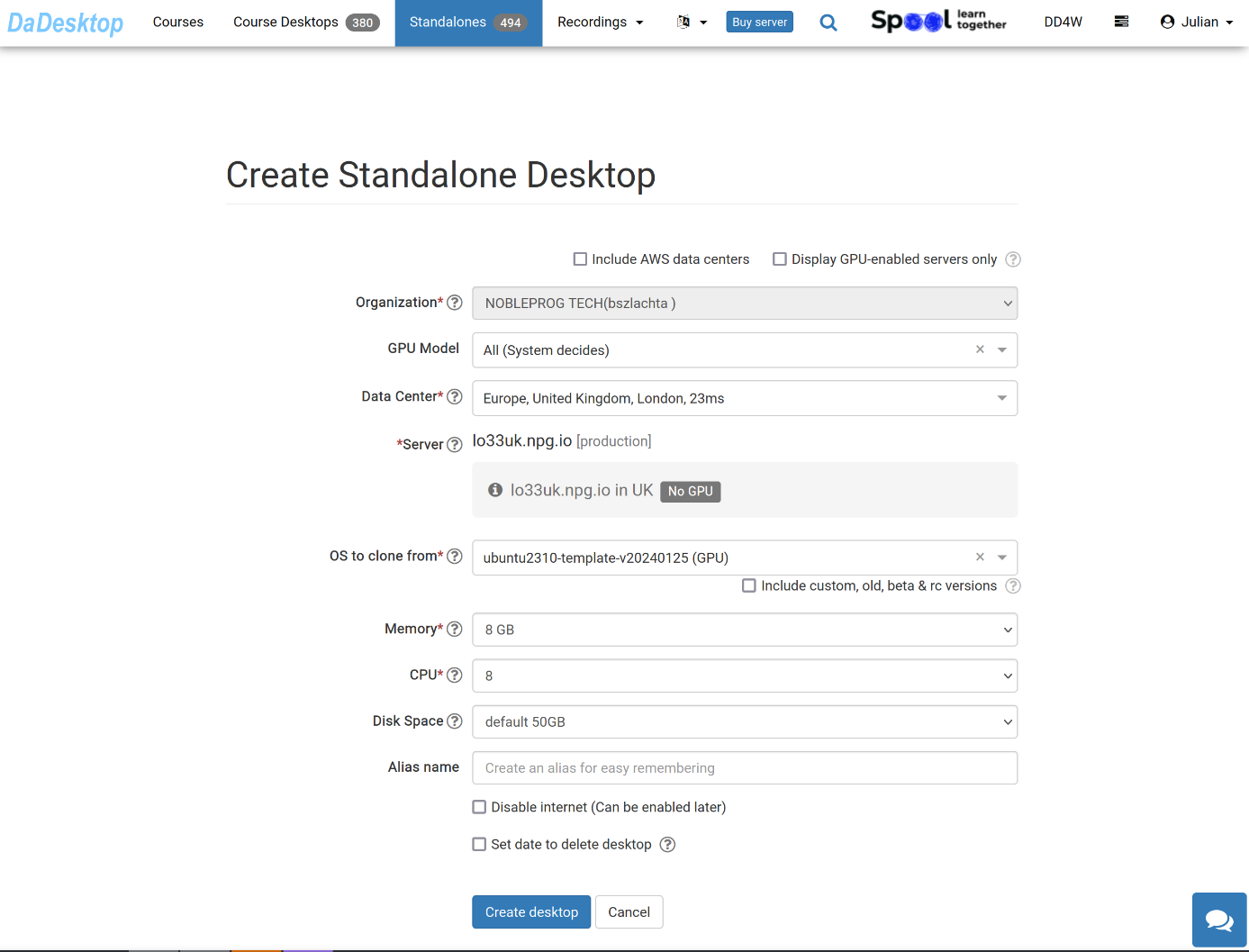
Here’s what each field means:
-
GPU Model
Pick the GPU model and type if needed. Tick the 'Display GPU enabled servers' option to only show servers with GPUs available. -
Datacentre / Server
Choose the datacentre region and server closest to your location in New Zealand. -
OS to clone from
Several different Operating Systems are available.
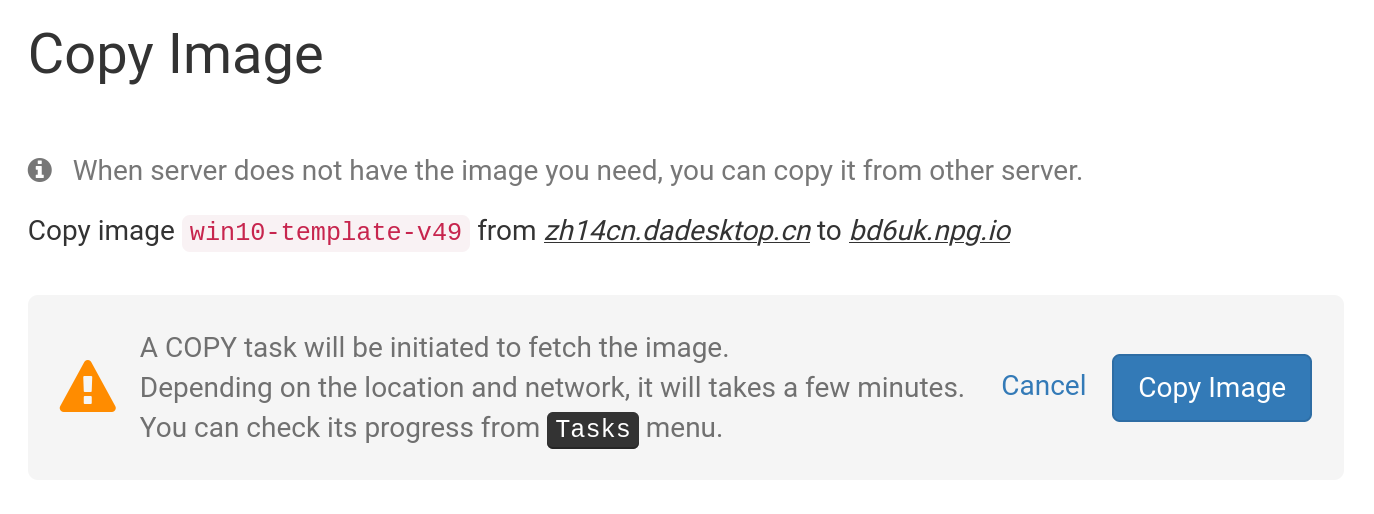
If a template is labelled 'Copy Required', then the template’s available but must be copied to that server before you can use it. Typically, only Windows operating systems may come with extra fees. -
Include Custom, RC, and Old Versions
DaDesktop updates OS templates regularly. However, if you’re experiencing any problems with the newest template, you could try using an older version instead.
-
Memory
The amount of memory to limit the desktops to. Keep in mind that you’re limited by the server’s resources by default. Each server may have different memory caps. If you need to bump these limits up, get in touch with us via Support Chat. -
Label
Add an alias if you need a simpler label for your standalone.
OS Template to Clone from
There’s a range of options when picking and creating an Operating System template to use.
You can go with Windows, or choose from various Linux distributions like Ubuntu, Debian, Almalinux, and others.
You can use a pre-built template, usually marked with a version number like VXX (for instance, V51).
Alternatively, we now offer the ability to build fully up-to-date Linux templates. The 'Build New' Linux templates rely on a different build process, using Linux sources alongside a script that applies the essential DaDesktop customisations. This means the template stays completely current, secure, and is simpler to deploy and maintain.
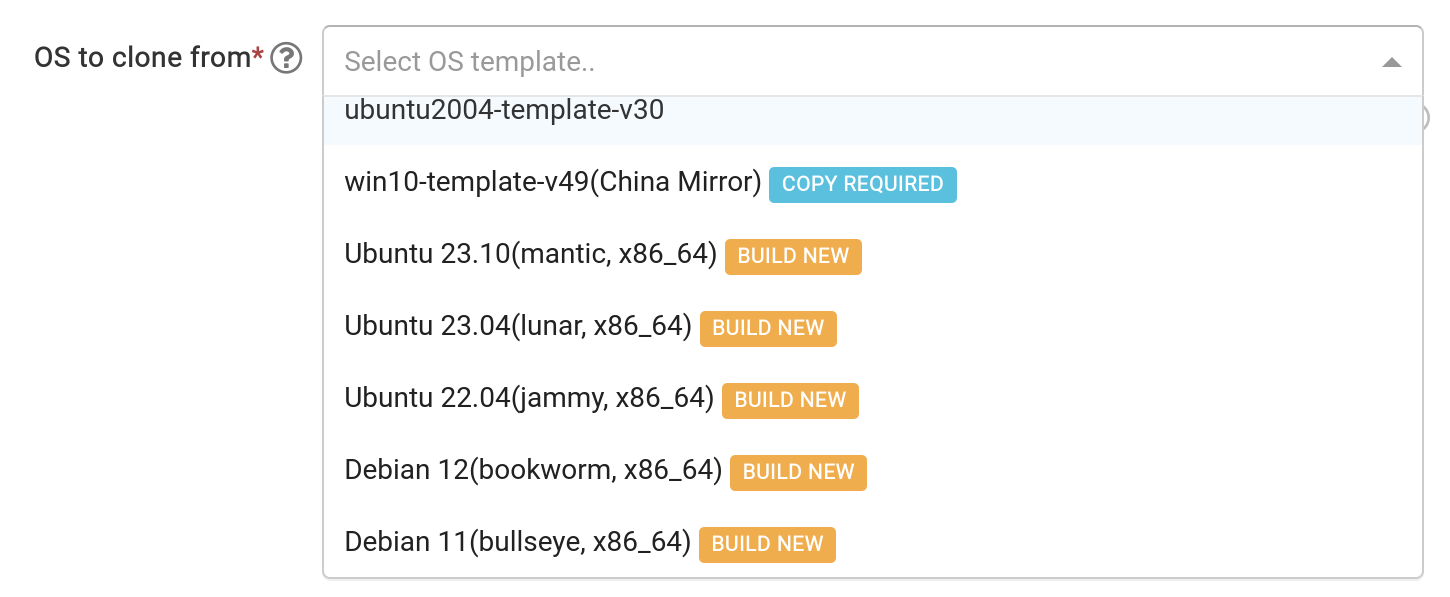
Building OS Template
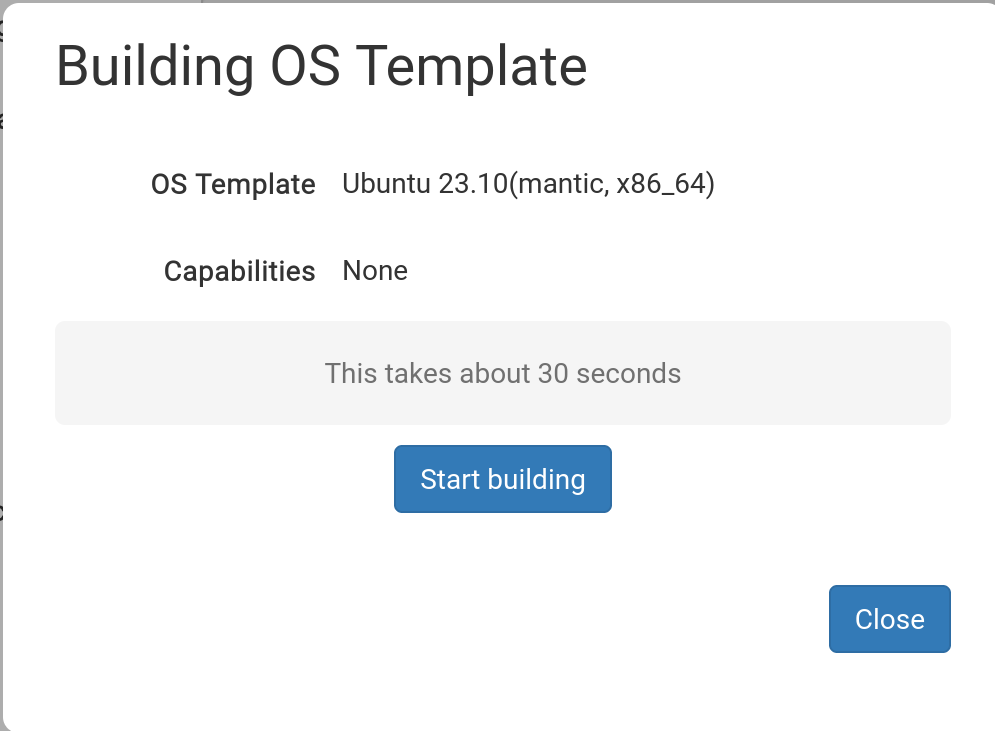
Once you’ve chosen the template you need, you’ll see the pop-up below.
Click 'Start Building'
The standalone will now be built for you. Do note that the build process might take longer than 30 seconds, and if it seems like it’s stalled, just hang on a bit longer.
Built template now available

With the template now built, you can tweak any options as needed, then click 'Save and Create Desktop'.
Your Standalone is being created — this usually takes just a few moments, far less time than building the template itself.
Your new Standalone is now ready. In the example below, it’s named 'julian-6iqm', but you could have given it a more descriptive label instead if you like.
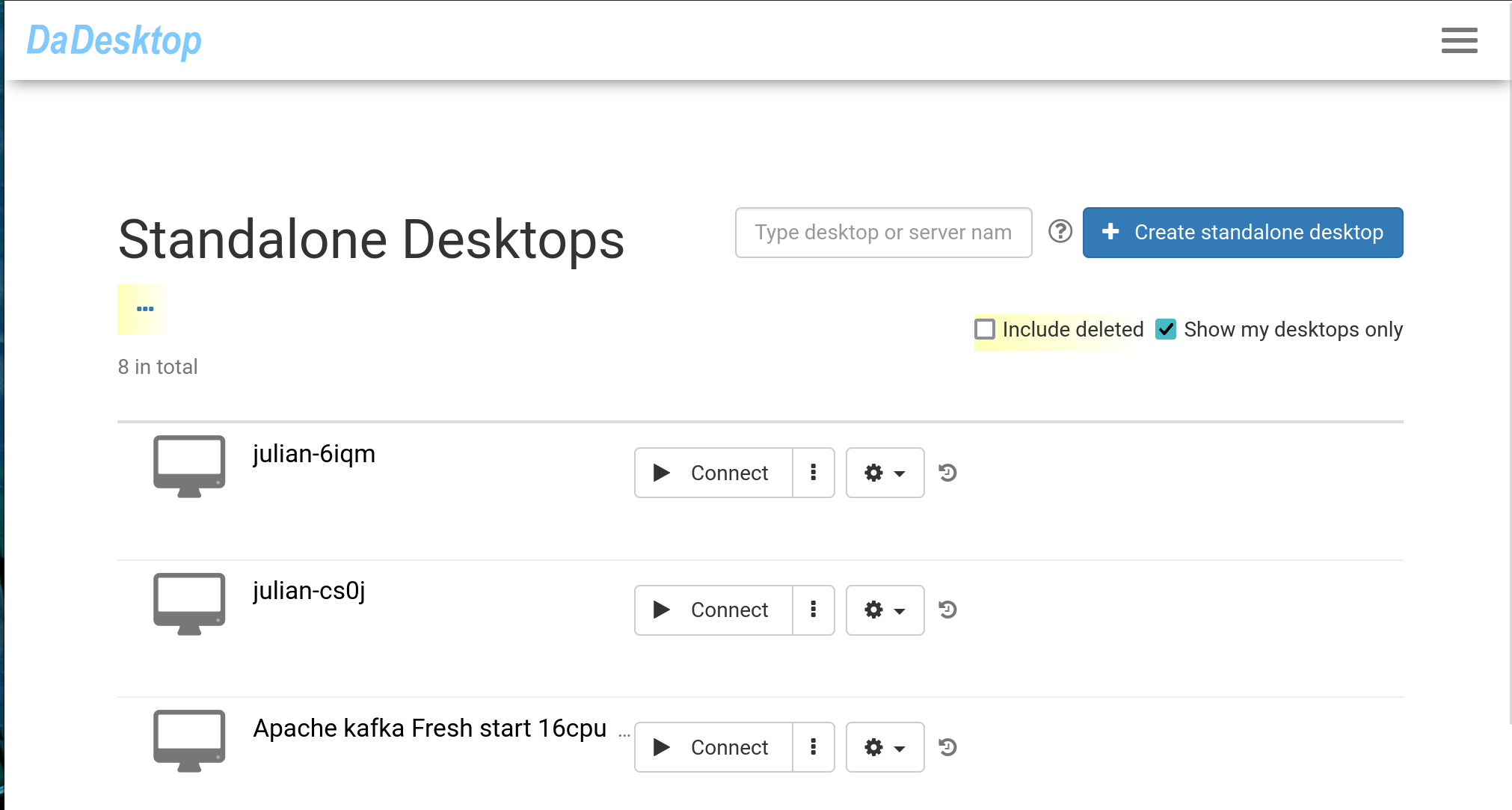
Click 'Connect' to start and connect to the Standalone machine.